Wood Floor Refinishing and Hardwood Flooring in Revere, MA

Twenty years of sanding, patching and installing hardwood in Revere condos, two-families and rental units.

Revere Wood Flooring has spent more than 20 years refinishing, repairing and installing hardwood in Revere, MA and the cities around it — wood floor refinishing, screen and recoat, hardwood floor repair, hardwood floor water damage, solid hardwood flooring, engineered hardwood flooring, stair treads, parquet floor refinishing, pine floor refinishing and replacing carpet with hardwood. Every one of those jobs starts with a look at what is actually under your feet, not a square-foot number over the phone.

That matters more here than it would in a newer city. Revere counts 24,139 housing units, 6,219 of them — 25.8 percent — built in 1939 or earlier, and 65.4 percent predating 1980. Another 18.1 percent date from 2000 or later, and 4,875 units sit in buildings of fifty or more. One week can run from old-growth pine over cut nails in a two-family to prefinished engineered plank twelve stories up on Revere Beach Boulevard.

So we measure before we commit: remaining thickness above the tongue on a solid floor, wear layer on an engineered one, moisture readings through the boards and into the subfloor, build year and painted surfaces before any sander is switched on. Then you get a written scope naming the species, the grit sequence, the finish and the coat count, and a fixed price against it.

Get Your Free Quote

Fast response • No obligation

So we can reach you about your request.

So we can send you a confirmation after you submit this inquiry form.

  • 20+ Years on New England Floors
  • Free Written Estimates
  • Dustless Sanding

What we do

Our Services

Hardwood floors refinished, repaired and installed across Revere, MA

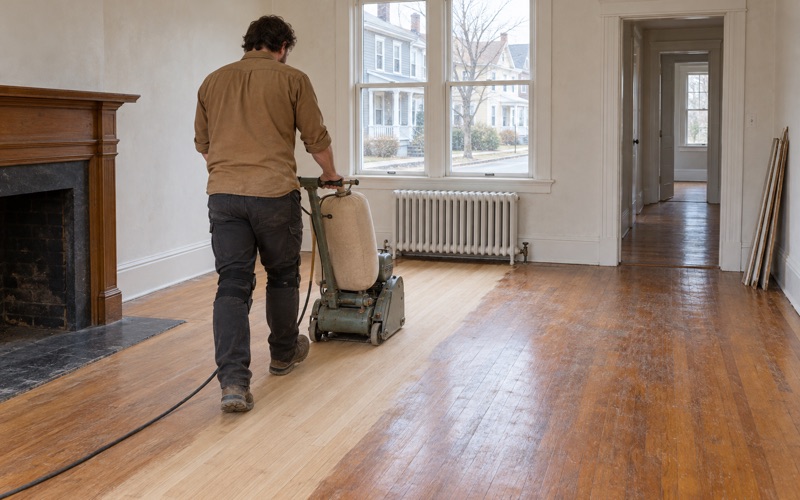
Worker walking a drum sander along red oak strip flooring in the front room of a Point of Pines house in Revere.

Wood Floor Refinishing

Sanding, staining and finishing hardwood floors across Revere, MA, from worn traffic lanes to a full color change.

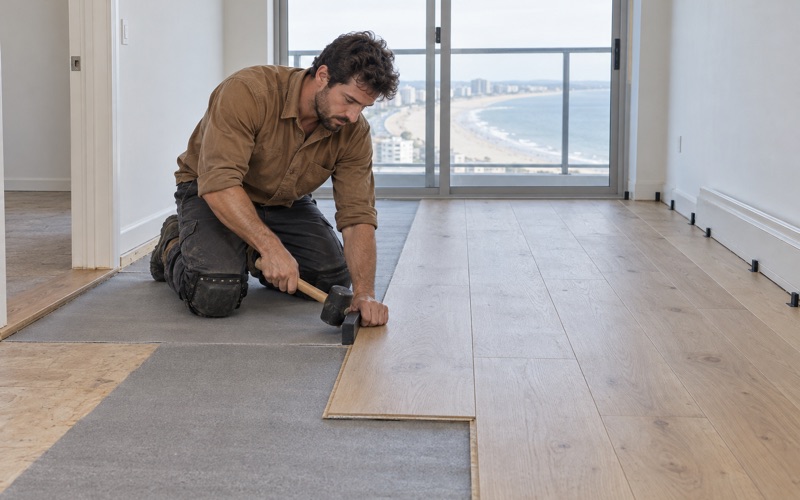
Worker seating a wide engineered white oak plank with a tapping block in a high-floor Revere Beach condominium.

Engineered Hardwood Flooring

Engineered wood floors supplied and installed across Revere, MA, over concrete, radiant heat and in condo units.

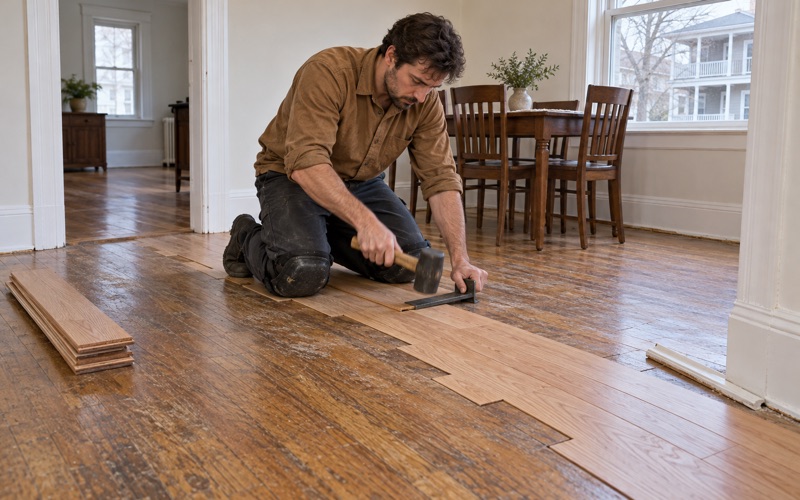
Worker drawing a replacement red oak board tight with a pull bar in a lace-in repair across a Revere doorway path.

Hardwood Floor Repair

Board replacement, radiator patches, squeak repairs and matching work on hardwood floors across Revere, MA.

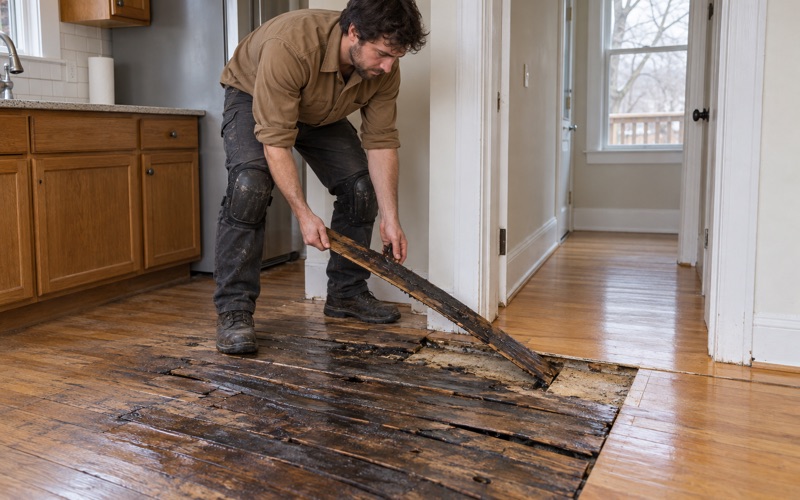
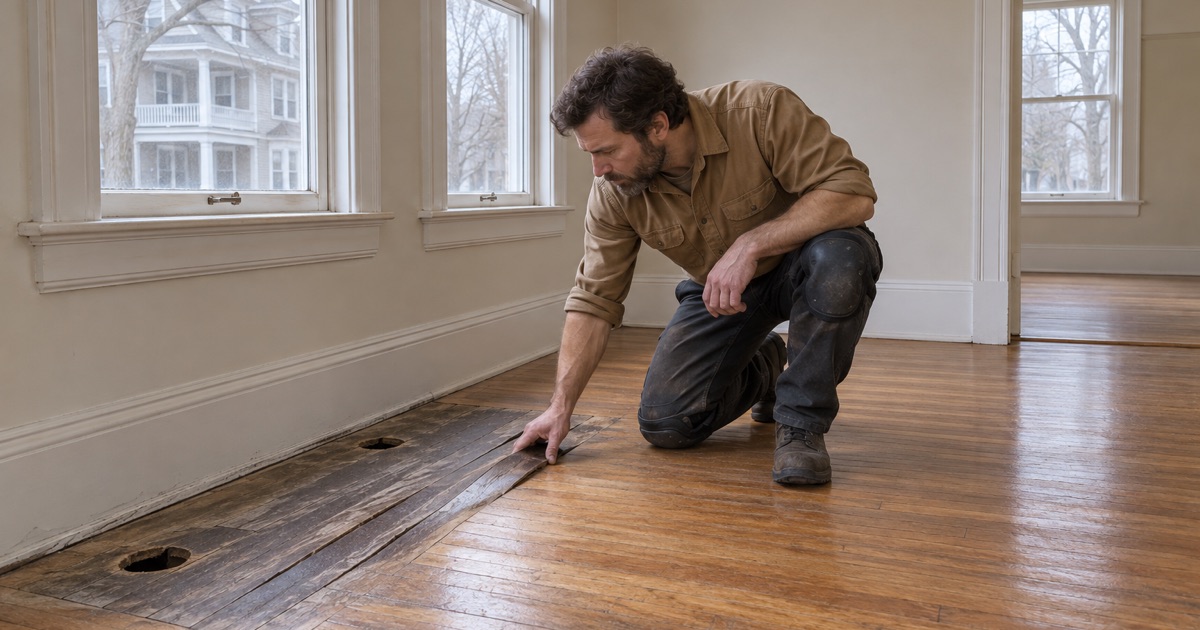
Worker lifting out a blackened, cupped red oak board where a frozen pipe burst in a Revere two-family kitchen.

Hardwood Floor Water Damage

Water-damaged hardwood traced, dried, documented for the adjuster and restored, across Revere, MA.

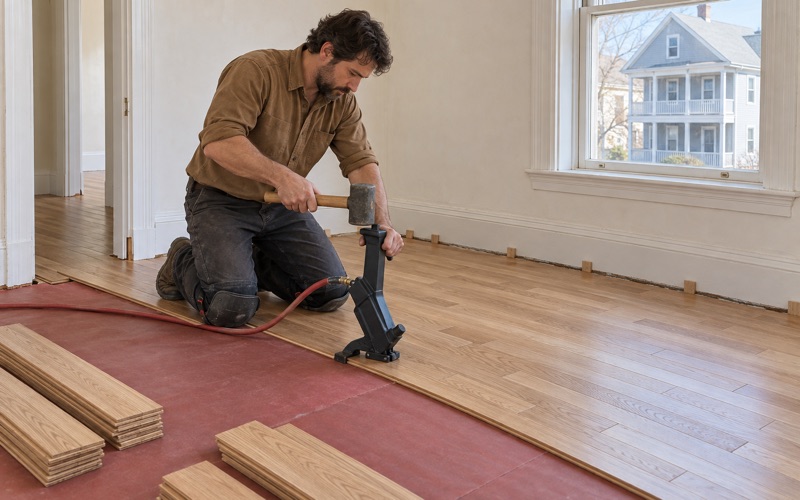
Worker driving a flooring nailer against the tongue of a new red oak board in the upper flat of a Revere two-family.

Solid Hardwood Flooring

Solid oak, white oak and maple floors supplied, installed and finished across Revere, MA.

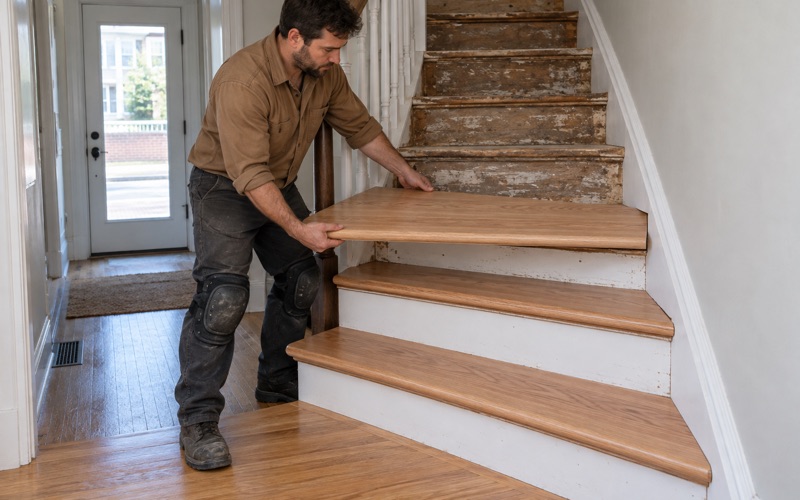
Worker lowering a red oak retro tread with a bullnose front edge onto a stair in a Revere two-family front hall.

Hardwood Stair Treads

Wood stair treads, risers and nosings built, stripped and refinished across Revere, MA.

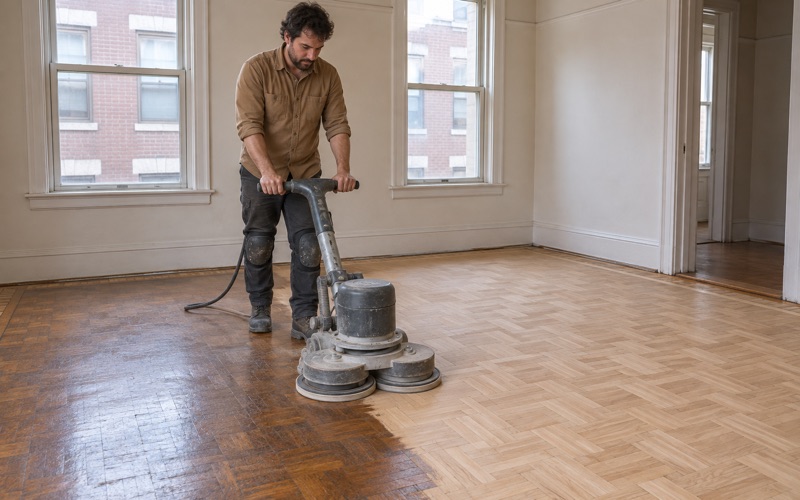
Worker refinishing an old oak finger-block parquet floor with a planetary sander in a 1920s Revere apartment.

Parquet Floor Refinishing

Parquet floors assessed, re-bonded and refinished across Revere, MA, including tiles laid over black mastic.

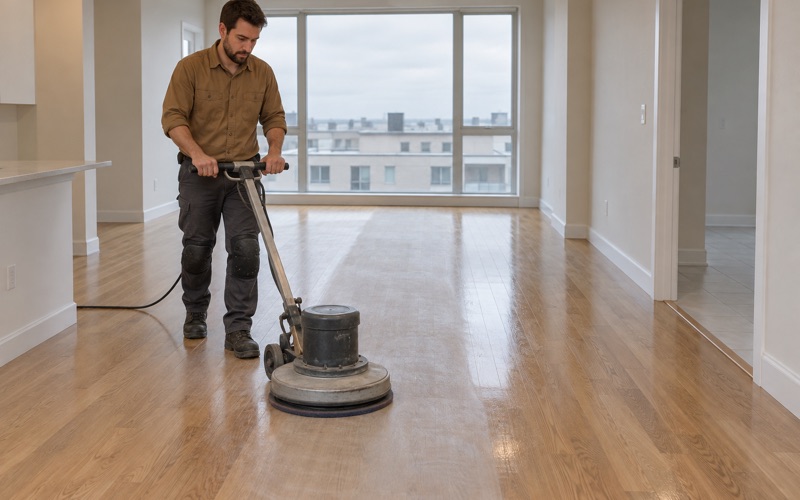
Worker screening a sound white oak floor with a floor buffer in a Revere condominium unit before a fresh coat.

Screen And Recoat Hardwood Floors

A one-day hardwood refresh across Revere, MA that renews the finish without sanding any wood away.

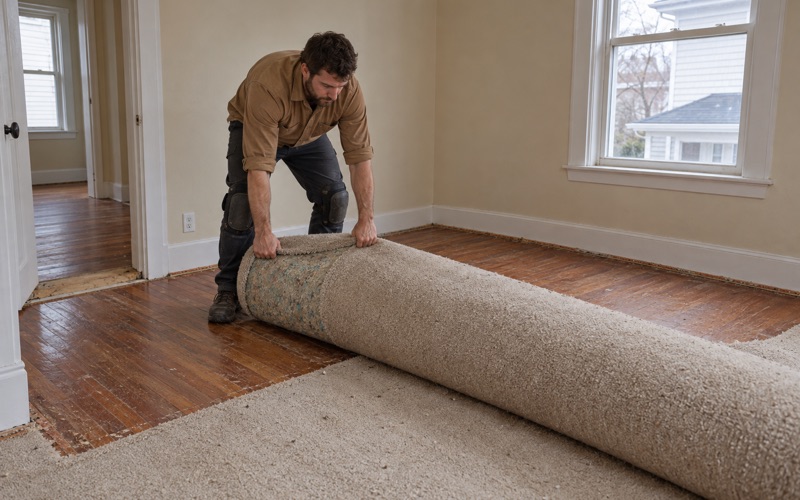
Worker rolling back wall-to-wall carpet to uncover original red oak floorboards in a Revere bedroom.

Replace Carpet With Hardwood

Carpet lifted, subfloor prepared and hardwood installed across Revere, MA, including floors found under old carpet.

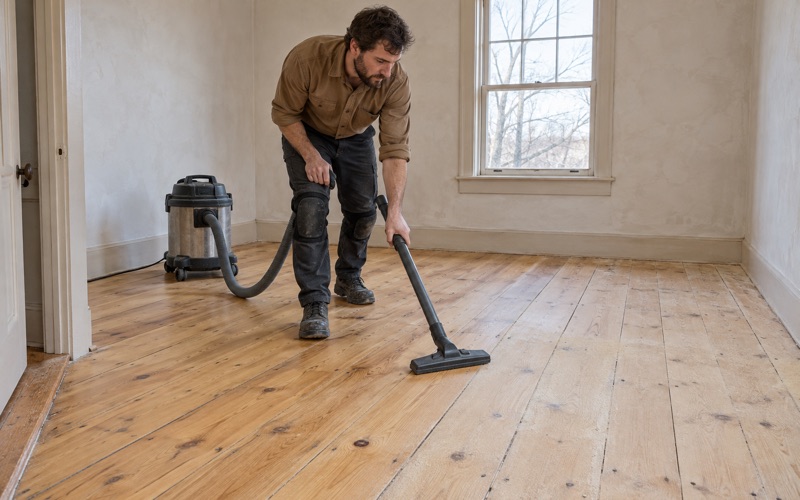
Worker vacuuming sanded wide pine floorboards in an old house before the first coat goes on.

Pine Floor Refinishing

Old pine floors sanded, repaired and finished across Revere, MA, with the character kept rather than erased.

Twenty Years Of Hardwood Work In Revere

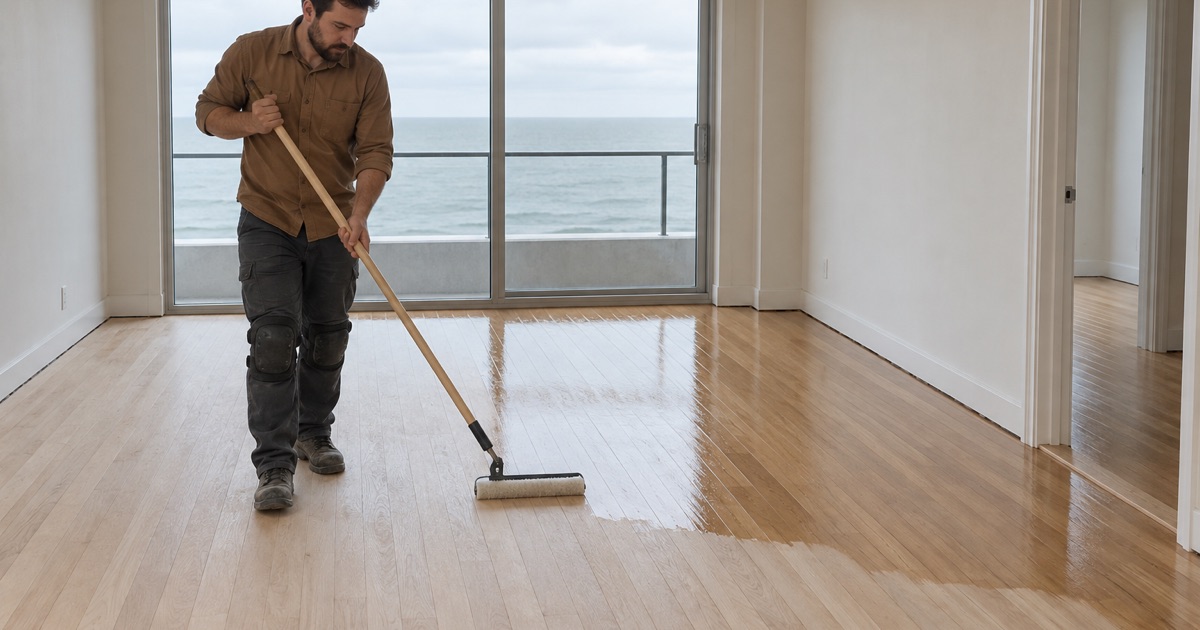
Worker spreading clear finish across a refinished white oak floor in an ocean-facing condominium living room on Revere Beach Boulevard.

Two Decades On New England Floors

Twenty-plus years in this market is why we quote a 1920s two-family differently from a 2015 condo. We have sanded enough eastern white pine to know when a floor has nothing left above the fasteners, pulled enough black mastic off parquet to price that work honestly, and run enough elevator buildings to ask about the loading dock before we ask about the color. It is the reason the estimate survives contact with the floor.

Why Choose Revere Wood Flooring

Thickness Read First

Every solid floor is probed at a register cut or a threshold before the drum sander leaves the truck, because a quarter of Revere’s housing predates 1940 and a floor already taken down three times has little left above the tongue — so it gets a screen and recoat rather than a cut that pops nail heads through the finish.

Buildings Worked, Not Just Units

No high-rise job is booked before the freight elevator window, the dock access and the trust’s rules on hard flooring are in hand, because 4,875 Revere units sit in buildings of fifty or more — so the crew starts the morning it was scheduled rather than being turned around with the sanders still in the van.

Lead-Safe Before The Sander

Massachusetts administers its own renovation rules under 454 CMR 22.00, and power sanding painted surfaces without HEPA-filtered exhaust is prohibited — so every pre-1978 house has its build year and its painted treads and baseboards read first, rather than the containment question arising with the dust already in the air.

One Floor Stays Livable

Two-unit structures account for 5,707 of Revere’s 24,139 housing units, so a two-family is sequenced one unit at a time with the shared stair run staged last — and the household on the other floor keeps its kitchen and its bathroom rather than moving out for a week over a floor.

Finishes Checked Against State Limits

Never ordered on price alone: every coating is picked against 310 CMR 7.25(11), which caps varnishes and sanding sealers at 350 grams per liter in Massachusetts, tighter than the federal number — so what goes on your floor is legal in this state rather than whatever a distributor had on the shelf.

Water Traced To Its Source

No wet floor is opened up before a moisture meter finds where the water entered and how far it traveled through the subfloor, so a leaking riser or a failed sump pump is dealt with before new boards go down — rather than the replacement boards cupping again six weeks later.

Saving The Floor That Is Already There

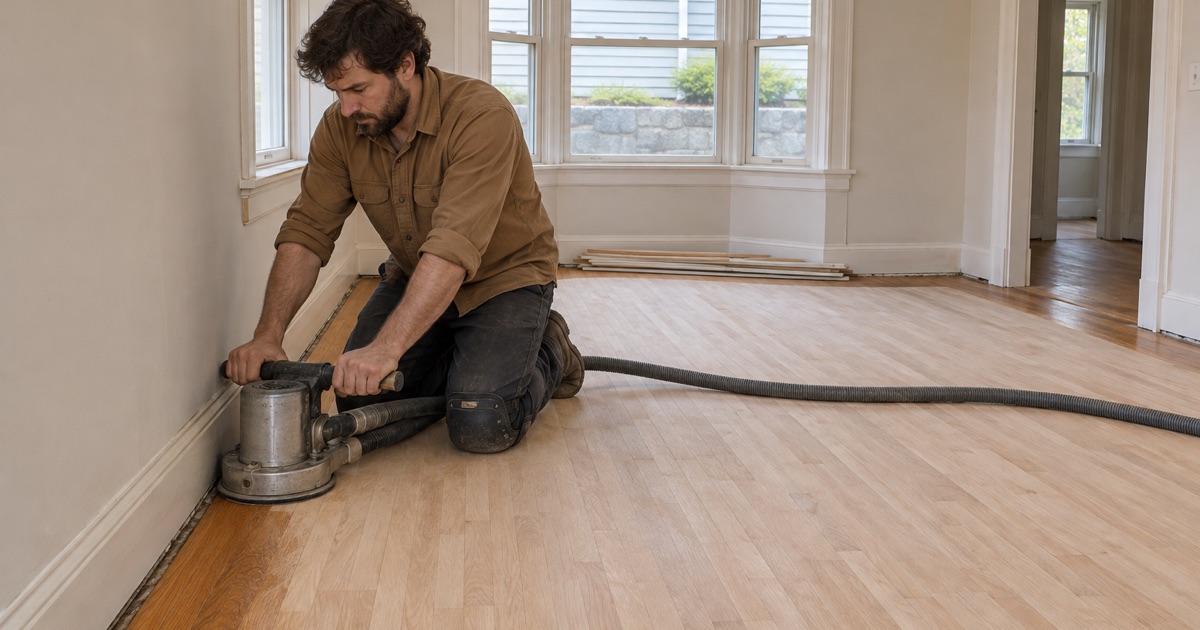
Worker running an edger along the perimeter of a red oak floor in the front room of a Beachmont bungalow in Revere.

Full Sand Versus A Screen And Recoat

A screen and recoat abrades the existing finish and lays a fresh coat over it in a day, removing no wood; a full sand goes to raw through a grit sequence and resets color, stains and cupping along with it. We tell you which one your floor qualifies for, because each is wasted money in the other’s place.

Red Oak Found Under Carpet, Linoleum Or Paint

Carpet in a pre-1960 house very often has red oak underneath it, and the floor is rarely ready the moment the carpet is up. Pad residue, staples, tack strip, linoleum and old adhesive all come off before any abrasive touches the wood — sanding that layer in is what gums a belt and scars the surface.

Radiator Removal Patches Woven In Matching Boards

Where a steam radiator or a riser came out there is an unfinished square and a hole through the boards. We patch with matching stock woven into the existing runs rather than dropping in filler, because done before the sanding the patch disappears and done afterwards it is visible from the doorway.

Eastern White Pine And Early Oak Floor Refinishing

Wide eastern white pine and early oak in pre-1900 and Federal-era houses are soft, often face nailed with cut nails, and frequently down to their last sanding. We check remaining thickness first and work with lighter equipment and a gentler grit sequence than an oak floor would take.

Parquet Floor Refinishing Over Black Mastic

Parquet in older apartment buildings is thin, and the black mastic under it is a material to handle carefully rather than sand aggressively. We check the remaining thickness, re-bond hollow tiles and refinish with equipment that will not tear the short grain out; where the parquet is past saving we price replacement instead.

Orange Oak Taken To Natural Or A Darker Stain

That orange cast is an old shellac finish or an amber oil-modified polyurethane, not the color of the wood itself. Sanding to bare and finishing in a waterborne product brings red oak back to a natural tone, and a stain step takes it darker — so we put samples down on your own floor, in your own light.

Stair Tread Refinishing And Stripping Painted Risers

Stairs are quoted by the tread and the riser, never folded into a square-foot number, because every one of them is hand work. Painted treads are stripped rather than power sanded, and in a pre-1978 house that is a lead-safe question before it is ever a finish question.

Dustless Sanding, Fumes And Cure Time

Our sanders run to HEPA-vacuum containment rather than a dust bag, and cabinets, closets and HVAC returns get masked on top of that. The stronger constraint is usually the finish, since waterborne polyurethane clears far faster than an oil-modified product and that decides whether the unit is livable overnight.

Hardwood Refinishing Before A Listing Goes Up

A floor photographed with worn lanes and a gray hallway costs more in a listing than the refinishing would have. We work to the photography date and the open house rather than an open-ended schedule, and a screen and recoat two weeks out usually shows better than a full sand rushed into the last three days.

Engineered Wear Layer Thickness Before Sanding

An engineered floor can only be sanded while enough wear layer remains above the core, and that is measured at a vent cut or a threshold rather than assumed from the box it came in. We tell you what your floor will actually take, including when the answer is one light pass and no more.

New Wood Floors, And What Goes Under Them

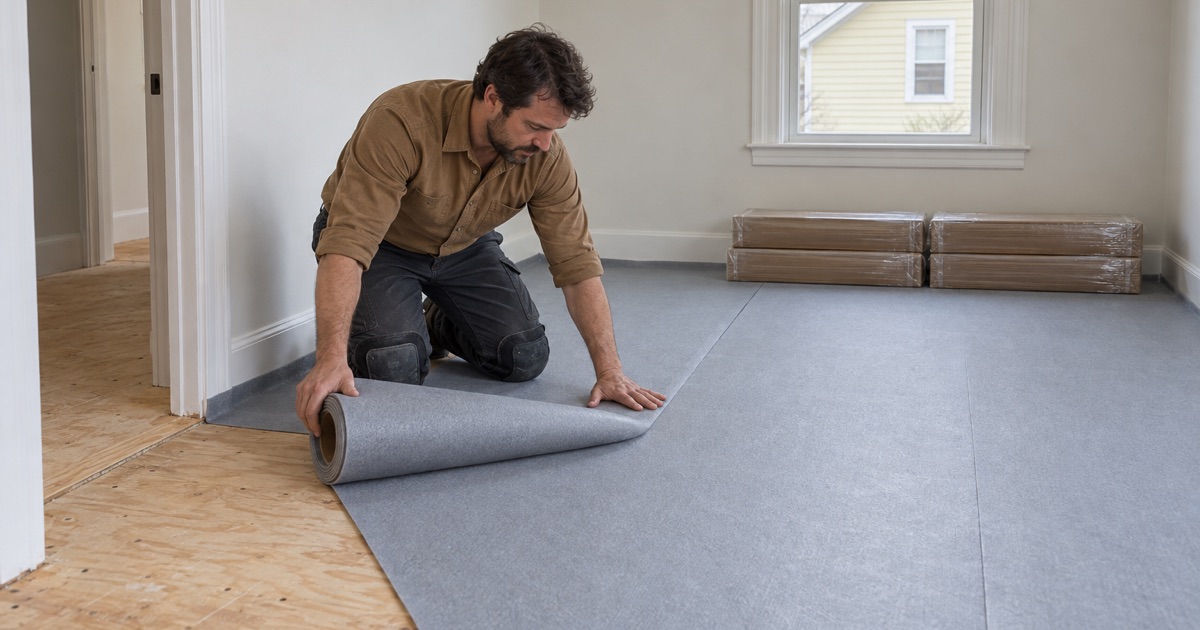
Worker rolling out foam underlayment over a plywood subfloor before new engineered hardwood goes down in a Revere bedroom.

Solid Hardwood, Engineered Wood And Vinyl Plank

Solid hardwood refinishes repeatedly and moves with the seasons; engineered wood is steadier over concrete and below grade but is limited by its wear layer; luxury vinyl plank is not wood and does not refinish at all. We match the product to the substrate, the moisture conditions and how long you intend to own the place.

Replacing Carpet With Hardwood Flooring

Taking carpet out and putting hardwood down is as much subfloor work as flooring work: pad, staples, tack strip and any old adhesive come out, then the subfloor is checked for flatness, fastening and moisture. Hardwood laid over a subfloor nobody flattened telegraphs every high spot as a squeak within a year.

Carpeted Stairs Rebuilt With Wood Treads And Risers

Carpeted stairs usually hide builder-grade treads that were never meant to be seen, so converting them means new treads, risers and nosing rather than sanding what is there. We template each step, because older stair runs here are rarely identical top to bottom, and plan the finish schedule around your access.

Engineered Hardwood Flooring Below Grade

Below-grade levels carry moisture out of the slab and into anything laid on them, which is why solid hardwood does not belong there. We test the slab, specify a vapor retarder and install engineered material rated for the location — skipping the moisture test is how a basement floor cups in one heating season.

Weave-In Board Replacement After A Wall Comes Out

When a wall comes down there is a strip of missing floor, often running against the direction of the boards. We weave new stock into the existing runs with staggered ends, matching species, cut and grade, then blend the area under one finish, because a threshold strip across an open room announces where the wall used to be.

Nail-Down, Glue-Down And Floating Installation

Nail-down suits solid hardwood over a wood subfloor, glue-down suits engineered material over concrete, and floating suits assemblies where the substrate cannot be penetrated or a sound layer is required. The substrate and the building’s rules choose the method, not the installer’s preference, and we tell you which before you sign anything.

Flooring Cleats Or Staples, And What Each Costs You

Cleats flex slightly with seasonal movement and hold a board without crushing it; staples grip harder and can split a tongue on dense or narrow stock. The wrong fastener does not fail on install day — it shows up as squeaks and movement in the second or third winter, which is far more expensive to chase.

Sound Underlayment A Building May Require

Many condominium trusts require a specified acoustic underlayment under any hard flooring, and some write a rug coverage requirement into the bylaws as well. We get those requirements in writing from the association before ordering material, because a floor installed against the bylaws can be ordered back up at the owner’s expense.

Herringbone, Chevron And Wide Plank Floors

Herringbone, chevron and wide plank all cost more in layout and waste than a straight-lay floor, and they need a flatter subfloor to look right. We set the centerlines against the room rather than the wall, because older houses here are rarely square and a patterned floor runs visibly off-axis when they are not.

Hardwood Flooring In Gut Renovations And New Builds

On a gut renovation or new construction the floor goes in against a sequence: drywall dry, HVAC running, wet trades finished, material acclimated on site. We book to that sequence rather than to a convenient date, and take moisture readings on delivery and again before installation.

Condos, Two-Families And Water Claims

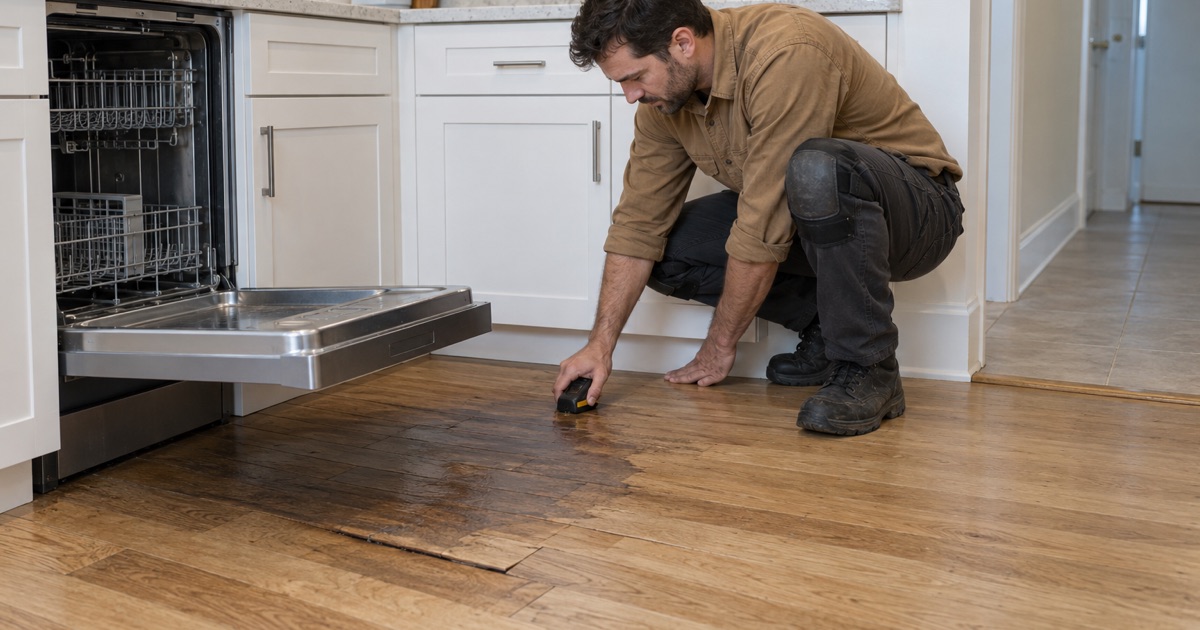
Worker testing a darkened white oak board beside the dishwasher in the kitchen of a Revere condominium unit.

Condominium Bylaws On Hard Flooring And Rug Coverage

Under a Massachusetts condominium trust, what goes on your own floor is governed by the bylaws: permitted materials, a required underlayment, often a rug coverage requirement to limit noise below. We read those requirements before quoting and build them into the scope, because installing first and reading afterwards can mean taking the floor back up.

Hardwood Installation In An Elevator Building

With 4,875 Revere housing units in buildings of fifty or more, a large share of this work happens above the ground floor. Freight elevator windows, dock access, a certificate of insurance for the management company and quiet hours are all settled before a start date, because a delivery that cannot get upstairs is a lost week.

Two-Family Refinishing One Floor At A Time

Two-unit structures are 5,707 of Revere’s 24,139 housing units, and in most of them somebody lives on each floor. We sequence a two-family one unit at a time and stage the shared stair run last, so the other household keeps its kitchen, its bathroom and its entry throughout the job.

Rental Turnover Floors And The Certificate Of Fitness

Revere requires every vacant dwelling unit to be inspected and issued a Certificate of Fitness before a new tenant occupies it, and the unit must be completely vacant for that inspection. The fee is $75.00, and renting without the certificate carries a fine of up to $20 per day for each day the tenant has resided there. We work to that vacancy window, because the floor has to finish and cure inside it.

Normal Wear And Tear On A Rental Floor

Scuffs, dulled finish and traffic lanes after a multi-year tenancy are wear; black pet stains through to the subfloor, gouges and damage from an unreported leak are not. We document condition with photographs and measurements so the distinction is on record rather than argued from memory, and we take that record the same way for a landlord or a tenant.

Lead-Safe Sanding In Pre-1978 Homes

Massachusetts has administered its own renovation rules under 454 CMR 22.00 since July 2010, in place of the federal program, and disturbing more than six square feet of painted surface in a room is Renovation Work under them. The Massachusetts Lead Law separately requires an owner to abate or contain lead paint where a child under six lives in pre-1978 housing, and 65.4 percent of Revere’s units predate 1980.

Hardwood Floor Water Damage Written For An Adjuster

An adjuster needs measurements, dated photographs and moisture readings taken while the floor is still wet, and that evidence is gone within days. We document the affected area, trace the source, meter the boards and the subfloor, and write a scope of repair that separates the drying from the flooring work.

Flood Coverage On A Lower-Level Floor

Surface water entering at grade and water rising from below are treated differently from a burst pipe, and a lower-level floor is where that distinction usually bites. We identify the entry path and document it plainly, because whether the water came in through a door or out of a riser changes who ends up paying.

Houses In A Local Historic District

Several of the older cities we serve have local historic districts, and owners reasonably assume that means the interior is regulated too. Under M.G.L. c.40C, section 7, district review covers exterior architectural features subject to public view and excludes interior arrangements — your floors are not reviewed.

Work Hours, Noise And Neighbors During A Sanding Job

Sanding is loud, and in a two-family or a condominium the people it affects most are not the ones paying for it. We work the hours the building or the city allows, give neighbors notice of the loudest days, and get the sanding done in as few of them as the floor permits.

Areas We Serve

Revere Wood Flooring provides wood-flooring throughout the greater Revere area, with the same crews and the same standards on every job.

Good to know

Frequently Asked Questions

What does it cost to refinish a hardwood floor?

Price follows square footage, board condition, and how much of the job is not sanding. Radiator patches, pulling staples and tack strip out of an old subfloor, stripping painted treads and weaving in replacement boards all add labor a square-foot number does not carry. We measure the rooms, write the scope out line by line and give you a fixed figure before anything is scheduled.

How long does a refinishing job take from start to finish?

Most single-unit refinishing runs three to five working days on site, and the finish keeps curing after we leave. Coat count, the product and whether stairs are in the scope are the variables, since stairs are done tread by tread. We give you the walk-on date, the furniture date and the rug date separately, because they are not the same day.

Can I stay in the house while the floors are being done?

Often yes, if we can seal off a livable zone with a working bathroom and keep the work moving room to room. In a two-family we sequence one floor at a time for exactly that reason. The finish usually decides it rather than the dust, because waterborne polyurethane clears far faster than an oil-modified product.

Do you use dustless sanding?

Our sanders run to HEPA-vacuum containment rather than a dust bag, which removes the great majority of airborne dust. It is not a sealed room and we do not claim it is, so cabinets, closets and HVAC returns still get masked. On pre-1978 homes it is not optional anyway: 454 CMR 22.00 prohibits power sanding painted surfaces without HEPA-filtered exhaust.

How do I know if my floor can be sanded again?

On a solid floor we check the remaining thickness above the tongue at a register cut, a closet edge or a threshold before quoting a sanding. On an engineered floor the same question is the wear layer, measured rather than guessed. If the answer is no we say so and price a screen and recoat, because a floor sanded past its limit starts throwing nail heads.

What is the difference between a screen and recoat and a full sand?

A screen and recoat abrades the existing finish and lays a fresh coat over it in a day, removing no wood. It cannot fix a stain that went into the wood, a color change, a cupped board or bare traffic lanes. A full sand goes back to raw wood through a grit sequence and resets all of that, including the color.

Which finish do you use, and does Massachusetts restrict that?

We work in waterborne polyurethane, oil-modified polyurethane and hardwax oil, matched to traffic, pets and how fast you need the room back. Massachusetts sets its own coating limits under 310 CMR 7.25(11), capping varnishes and sanding sealers at 350 grams per liter, tighter than the federal figure. Everything we apply is picked against that rule before the sheen conversation.

Can you match new boards to my existing floor?

We weave new boards into the existing field rather than patching a rectangle, so the ends stagger the way the original floor does. Species, cut and grade have to line up first: red oak beside white oak reads wrong after stain, and select grade against a common grade floor reads wrong immediately. Where no true match exists, we say so before the work starts.

Do you work in condominium and elevator buildings?

Routinely. A fifth-floor unit is a building job as much as a unit job: the freight elevator window, the loading dock, the trust's rules on hard flooring and underlayment, and the neighbors below all set the schedule. We get the association's requirements in writing before a date is booked, because a crew turned back at the dock costs you a week.

Do you handle water-damaged floors and insurance paperwork?

We trace where the water entered, meter the boards and the subfloor, dry the assembly and document it. Photographs and readings are taken while the floor is still wet, because that evidence is what an adjuster can use and it disappears within days. We do not adjust claims or speak for your carrier; we give you a measured, dated record.

Ready to Get Started?

Request a free quote today and we'll get back to you fast.